What you can do on KLAK
Explore card-backed token markets, open a capsule demo, or bring your card NFTs together across supported wallets. Start with the part you want to try.
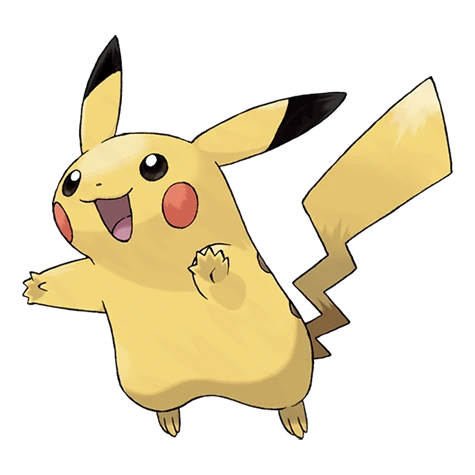 Explore a market
Understand the card category, price, and available liquidity.
 Discover GachaFi
See how staking connects token rewards with credits for openings.
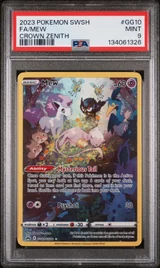 View your collection
View supported NFTs, token balances, and card delivery.
You do not need a wallet to explore the public preview. Connecting a wallet does not, by itself, authorize a transfer or spend.
How collectible markets work
A collectible market lets you buy and sell tokens backed by a defined category of vaulted cards. You can buy and hold token amounts below one whole token, without acquiring an entire card NFT at once.
Pikachu is the first market featured on KLAK. The rest of the Pokédex helps you explore possible markets; an unavailable entry is not a promise of a future launch.
Token prices reflect trading and available liquidity. They can differ from physical-card listings or the value of individual prints. Liquid trading does not mean unlimited liquidity: large orders can move the price substantially.
Before a trade
- Check the token, trading pair, and network.
- Review the estimated output, fees, price impact, and minimum received.
- Understand what the token represents and how redemption works.
The current market interface uses simulated prices and liquidity. A saved paper trade is a practice record in your browser; it does not spend funds, reserve a price, or submit an order.
Your paper history
On a market page, open Activity and choose Paper trades. KLAK keeps your latest 50 practice trades in this browser. Filter buys or sells, change the order, and browse every page of retained records.
Export CSV downloads every record matching your filters, with exact amounts and timestamps in UTC. The table shows your local time. History is not shared across devices or wallets, and clearing this site’s browser data removes it.
What 1 PIKA9 represents
PIKA9 represents eligible vaulted English Pikachu cards graded 9 or better by PSA or CGC. An authenticated, eligible deposit mints one whole token. The “9” refers to the grading category, not a card number or promised return.
Different eligible prints and editions share this market. PIKA9 does not give you a claim on every Pikachu card, track each edition’s price, or guarantee a rare print.
What do I receive when I redeem?
When redemption is available, one whole token redeems the next eligible card NFT in the vault queue. You review that exact NFT before confirming. You need at least 1 whole PIKA9 to redeem a card.
A card NFT represents the tokenized collectible. Delivery of the NFT to your wallet and physical shipping of the card are separate processes. Physical redemption depends on the card’s custodian and its terms.
See the Pikachu marketStaking rewards and spin credits
GachaFi is KLAK’s connection between staking and collectible openings. Staking has two separate reward paths: collectible-token fee rewards and spin credits.
Collectible-token rewards
KLAK stakers share 10% of collected launch trading fees, allocated according to stake over time. These rewards are also called reflections. Collectible-token fees can be claimed directly; some other fee assets require conversion into the target collectible token when claimed.
Rewards stream over 24 hours. The amount depends on activity and your share of the stake. There is no fixed APR or guaranteed amount of Pokémon-backed tokens. Conversion quotes show a minimum received before you confirm.
Spin credits
Credits accrue from the amount of KLAK staked and the time it remains staked. The staking page shows the applicable rate when available. Its preview calculator is illustrative and is not a promised reward rate.
- One whole credit can cover one entry in an eligible funded campaign.
- Campaign availability, shared capacity, and per-wallet limits still apply.
- Progress toward your next credit carries forward. Credits are nontransferable, do not expire, and cannot be exchanged for cash.
- Network gas is separate. A credit does not guarantee a card or other prize.
Can I unstake?
There is no staking lockup or withdrawal cooldown. Unstaking stops new accrual on the withdrawn amount; earned reflections, credits, and progress toward your next credit remain available.
Explore the staking calculatorHow capsule openings work
A gacha opening is a randomized draw from an active reward configuration. Depending on that configuration, outcomes can include KLAK, a card NFT, or no prize. Review the actual odds and inventory before entering.
Free demo versus a real entry
The capsule demo lets you choose a sample outcome and play its reveal. No purchase or random draw takes place, and no card or token is awarded. Its sample odds do not establish the terms of a future live campaign.
A real entry requires a wallet confirmation and verified current terms. After entry is accepted, randomness and settlement can remain pending. A pending entry is not a completed prize and is not an immediate refund.
Return to a pending opening
Confirmed entries are saved under Your openings in this browser, separately for each wallet and network. Choose “Track your opening” after entry, or look up a spin ID on the capsule page. KLAK retains up to 50 recent entries in this browser. Use Show more to reach older entries. Looking up the same opening reuses its result. Checking reads the current result; it never creates another entry. Use the vault link to review unclaimed rewards or NFT delivery.
Browser history is a convenience, not a complete onchain record. Keep your transaction receipt if you switch devices or clear browser storage.
If a card is unavailable
Some configurations specify a KLAK alternative when an NFT tier is depleted; others require NFT stock. The entry review must show which applies. An NFT outcome requires a separate delivery claim.
If an entry fails
A rejected sponsored entry does not spend a credit. An accepted entry keeps its original draw request. A terminal refunded sponsored draw may restore its credit once; paid-entry refunds, when applicable, are claimed separately.
Try the free capsule demoDepositing and withdrawing cards
The vault separates card NFTs you own, token balances you can redeem, and NFTs awaiting delivery. Card images are read from NFT metadata; an image alone is not evidence of ownership or eligibility.
Deposit a card NFT
- Connect the wallet that owns the NFT on its supported network.
- Select an eligible card. Ownership and admission must be verified.
- Review the NFT, token received, network, and destination wallet.
- Confirm in your wallet. An eligible Pikachu deposit mints one PIKA9.
A deposited NFT joins the shared vault. A later redemption may return a different eligible card.
Withdraw into a card NFT
- Choose a token balance with at least one whole token.
- Review the next eligible NFT and its delivery network.
- Approve the exact token amount if needed, then redeem to reserve the NFT.
- Open Deliveries and claim the reserved NFT to complete delivery.
The supported same-network route delivers to the connected wallet. The review asks you to confirm control, asset compatibility, and the action, then match the address’s last six characters. Changing wallets does not redirect a reserved NFT.
Reviewing an action is not the same as signing it. If you change accounts or networks, review the current details again.
Explore the vaultSupported networks and wallets
KLAK’s inventory system brings supported card collections from multiple networks into one view. Each NFT keeps its collection, token ID, ownership status, and source network. Aggregating a display does not bridge an asset.
KLAK’s current wallet transactions and vault transfers use Base. Transactions require the verified live deployment and the correct wallet network.
Courtyard card NFTs are part of KLAK’s supported collection view on Polygon. Connect the EVM wallet that holds the cards. Automatic discovery requires the inventory connection; Polygon vault transfers are not enabled in this preview.
Connect a separate Solana wallet to view supported collections. EVM addresses are not Solana destinations. Solana vault transfers are not live in this preview.
Which wallet holds my Courtyard cards?
Your Courtyard account can use an embedded wallet with its own address. Connecting another wallet does not display cards held by that account. Check your wallet address in Courtyard’s settings, and connect the wallet that actually owns the NFTs. You do not need to send a card to Base to view it.
Finding your Courtyard wallet address
What about smart wallets?
The same-looking address on two EVM networks does not establish that the same wallet can control assets on both. Confirm control and the ability to hold and transfer the asset on the actual receiving network. The destination review identifies deployed smart or delegated wallet code where detectable.
Cross-chain transfers require their own verified delivery route. A card shown as “Viewing only” cannot be deposited through that page.
Community tokens and reflections
The launchpad lets you explore community tokens paired with a collectible token. Pikachu is the only selectable reflection market at launch. The paired collectible asset is used for the token’s trading-fee reflections.
These tokens are separate speculative assets. Their prices can move independently from the collectible token. A meme paired with PIKA9 does not inherit PIKA9’s card backing or redemption rights.
PIKA9 is backed by eligible vaulted Pikachu cards. A community meme paired with PIKA9 has no card backing of its own.
Token creation currently saves a local preview in your browser. It does not deploy a token, create a pool, or make the preview available to other users.
Keep an unfinished idea
Your token name, artwork and settings are saved as you edit. Open Your drafts on the creation page to continue an idea or start a new one. Each draft is saved separately in this browser. You can delete a draft and use Undo to restore it.
If two tabs change the same draft, both versions are kept. Saving a token preview removes only its own finished draft. Drafts are not shared between devices or wallets, and clearing this site’s browser data removes them.
Return to a saved preview
Open Your previews on the launchpad, choose a token, then select Edit preview. You can revise its name, artwork, links and fee settings. Review and save to update the same preview.
Changes in progress stay in that tab until you save. Reloading the tab restores your draft. Save your changes before closing that tab. Your saved preview remains in this browser. If another tab updates it, choose the saved version or make a separate preview with your edits.
The launchpad keeps your filters and selected token in the page address, so you can return to the same view. Local previews are visible only in the browser where you saved them.
Explore the launchpadFees, liquidity and risk
- Trading: pool fees, price impact, and network gas can affect what you receive. A simulation is not a live quote.
- Staking and claiming: wallet transactions may require gas. Sponsored gacha entry covers the eligible entry, not network fees.
- Card delivery: NFT delivery may require a separate claim. Physical shipping and custodian charges are separate.
- Liquidity: a listed market may have limited buying or selling depth. Token prices and card valuations can diverge.
- Ownership: review the asset, collection, network, and full address. Metadata and wallet display alone do not establish redeemability.
Digital assets can lose value. Staking rewards depend on the product’s rules and activity; openings are random, and neither staking nor opening guarantees a profit or a specific card.
Key terms
- Collectible token
- A tradable token backed by an eligible category of vaulted cards. For PIKA9, one whole token can redeem one eligible card NFT under the vault’s rules.
- Card NFT
- A unique token representing a collectible card, with its own collection and token ID.
- Reflections
- Trading-fee rewards allocated to eligible holders or stakers under the relevant product’s rules.
- GachaFi
- KLAK’s connection between staking rewards, earned credits, and collectible gacha openings.
- Price impact
- The change in execution price caused by an order consuming available liquidity.
- Slippage tolerance
- The allowed difference between a reviewed quote and execution, reflected in the minimum you agree to receive.
- Admission
- Verification that a card meets the vault’s accepted asset and grading rules.
- Release ID
- The identifier for a reserved NFT delivery. It is different from a gacha spin ID.
No matching section.
Try a shorter phrase, such as “wallet”, “fees”, or “Pikachu”.